Operational Principles of Laser Stone Cleaning
Laser Stone Cleaning
is a high-precision, non-contact methodology for the removal of surface contaminants - including graffiti, soot, moss, and paint - without compromising the integrity of the underlying substrate. Due to its highly selective interaction with impurities, this method is ideally suited for the restoration of monuments, historical facades, and the cleaning of intricate architectural reliefs.

Key Advantages and Technical Features:
-
Material Integrity: Laser ablation preserves the natural stone structure without inducing the surface degradation typically associated with abrasive sandblasting.
-
Decontamination Efficiency: Effectively removes biological growth (organic deposits), oxide layers, carbon soot, and vandalistic graffiti.
-
Geometric Precision: Enables the meticulous treatment of restricted access areas and highly detailed architectural elements.
-
Ecological Sustainability: The process is entirely dry and solvent-free, requiring no chemical reagents or abrasive media.

Limitations of Traditional Stone Cleaning Methods
Traditional methodologies possess significant inherent drawbacks. Mechanical treatment, for instance, is labor-intensive and requires substantial physical force, which frequently leads to irreversible structural damage to the stone. Conversely, chemical methods often fail to yield optimal results, as reactive agents can adversely interact with both the contaminants and the underlying mineral composition of the substrate.


Advantages of Laser Decontamination
Laser cleaning offers a superior alternative, operating with the surgical precision of a high-accuracy instrument. The focused laser beam allows for the targeted treatment of specific surface zones without affecting the adjacent material.
Much like the removal of a tattoo from skin, the laser vaporizes impurities—including oxidation, graffiti, paint residues, and atmospheric pollutants—without compromising the base layers. This delicate approach preserves the original texture and intricate relief of the stone.
Limitations of Traditional Stone Cleaning Methods
Traditional methodologies possess significant inherent drawbacks. Mechanical treatment, for instance, is labor-intensive and requires substantial physical force, which frequently leads to irreversible structural damage to the stone. Conversely, chemical methods often fail to yield optimal results, as reactive agents can adversely interact with both the contaminants and the underlying mineral composition of the substrate.

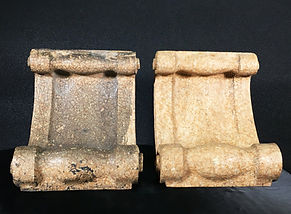
Case Studies in Professional Restoration
Restoration specialists in Moscow have already integrated laser technology to successfully rehabilitate historical facades, sculptures, and bas-reliefs. The methodology has proven indispensable for archaeological sites, specifically when treating white-stone carvings from the 12th and 13th centuries. In such contexts, "jewelry-level" precision is paramount to preserving every detail of the ancient ornamentation.
Conclusions
Superiority Over Traditional Modalities: Laser cleaning demonstrates definitive advantages compared to conventional stone restoration methods. It facilitates the precise removal of contaminants while maintaining the integrity of the substrate and preserving intricate ornamental details.
Empirical Effectiveness: The technology has established a proven track record across diverse applications, ranging from historical facades to sensitive archaeological artifacts. It enables the successful rehabilitation of objects previously categorized as beyond restoration.
Safety and Environmental Stewardship: Laser processing is inherently safe for both personnel and the environment. By eliminating the requirement for water, chemical reagents, and abrasive media, it addresses the rigorous sustainability standards essential for the preservation of cultural heritage.
Future Technological Evolution: The trajectory for laser technology involves significant expansion. Future developments will focus on multi-material restoration capabilities, as well as the integration of automation and robotics. These advancements are poised to increase process efficiency, reduce operational expenditures, and broaden accessibility across the restoration sector.
